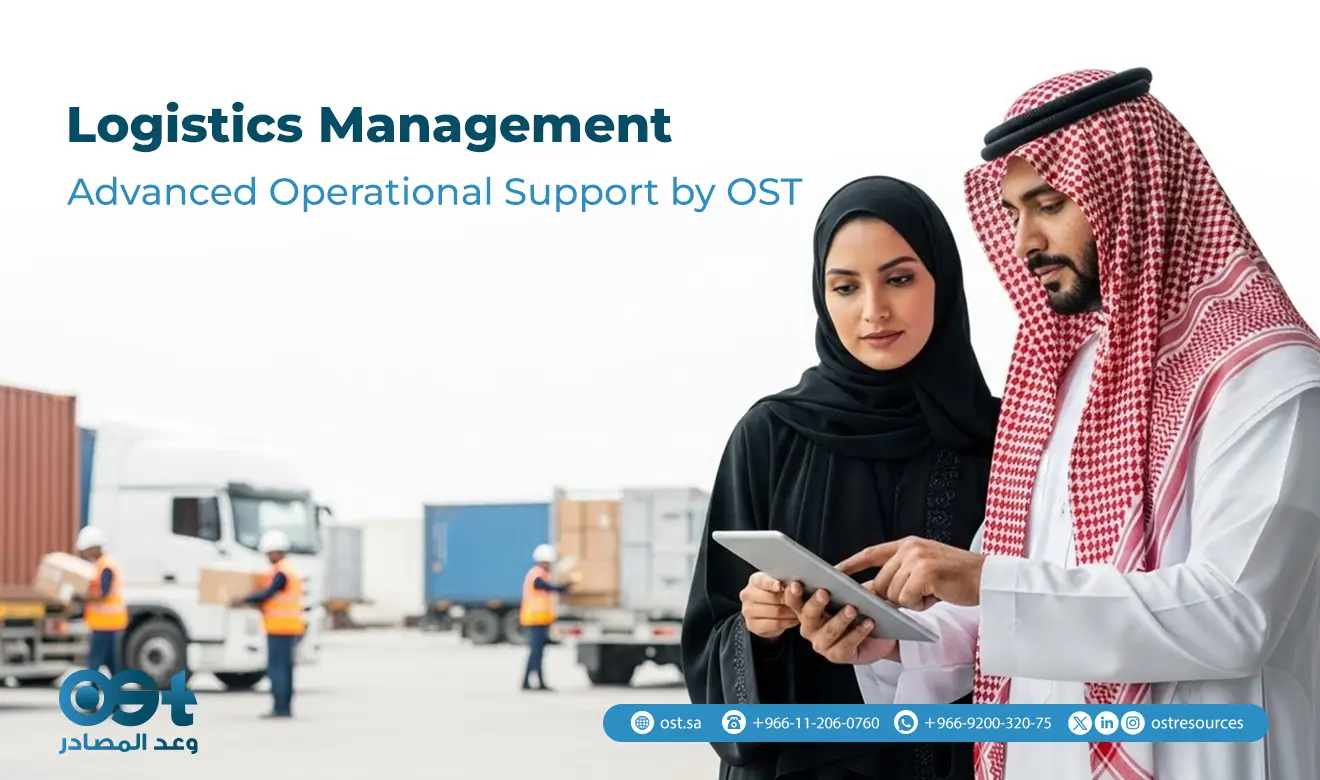
Logistics management plays a critical role in ensuring the smooth flow of goods, information, and resources across organizations. It gives attention to planning, the execution, and the control of the efficient movement and storage processes that are used in facilitating business operations. Effective logistics management helps organizations reduce operational risks, improve service quality, and maintain consistency across supply chains.
Introduction to Logistics Management
Logistics management refers to the coordination of transportation, warehousing, inventory, and order fulfillment activities. Its major focus is to provide the correct product, quantity, and time at the least cost possible. As global trade expands and customer expectations rise, logistics management has become a strategic function rather than a back-end operation.
Key Logistics Management Functions
Logistics management is built on several core functions that work together to support operational efficiency:
- The transportation control to provide high-quality delivery on time and economically.
- Inventory management to balance between availability and carrying costs.
- Optimization of warehousing and storage.
- Accuracy in order processing and fulfillment.
- Packaging and material handling.
All the functions are involved in the service reliability and cost control.
Supply Chain Coordination Methods
Effective logistics management relies on clear and structured coordination across all supply chain participants. Close integration among suppliers, distributors, and logistics partners assists in the minimization of delays, enhanced information sharing, and consistency in operations. The table below provides the most popular supply chain coordination practices and their direct effects on the logistics performance.
| Coordination Method | Description | Operational Impact |
| Centralized Planning | Unified planning across logistics activities and partners | Improves consistency and reduces scheduling conflicts |
| Demand Forecasting | Data-driven prediction of customer demand | Enhances inventory accuracy and reduces stock shortages |
| Real-Time Communication | Instant data sharing between supply chain stakeholders | Minimizes delays and improves responsiveness |
| Standardized Procedures | Unified operational guidelines across partners | Ensures process consistency and service reliability |
Technology in Logistics Operations
Technology has transformed logistics management by significantly improving visibility, control, and decision-making across operations. With the help of advanced digital solutions like transportation management systems, warehouse management systems, and integrated data analytics platforms, organizations can track shipments in real time, track inventory accuracy, and do optimal routing with consideration to cost, time, and capacity constraints. Moreover, automation solutions optimize the monotonous work, including processing orders, updating inventory, and improving transparency and responsibility with real-time tracking. Together, these technologies reduce human error, improve operational speed, and support more agile and data-driven logistics management strategies.
Logistics Management Challenges
Despite its importance, logistics management faces a wide range of operational and strategic challenges that can directly impact performance. These problems are unstable fuel and transportation prices, unforeseen supply chain issues, inadequate or obsolete infrastructure, bureaucracy of regulations, and growing customer demands for speed and transparency. Moreover, there is the complexity of global sourcing and multi-location functioning, which complicates coordination and control. The need to deal with numerous stakeholders at a cost-effective and service quality-stable level poses the necessity of constant planning, proactive risk analysis, and flexible logistics strategies that should be able to change depending on the evolving market conditions.
Cost Optimization in Logistics
Cost optimization is a core objective of logistics management and a key driver of overall operational performance. This is done by organizations with a mix of strategic planning and continuous improvement programs, which include consolidation of shipments to minimize transportation costs, optimization of delivery routes to save time and fuel, and increasing inventory turnover that can reduce storage and holding costs. The importance of data-driven decision-making lies in the fact that it helps analyze the cost correctly, predict the demand, and measure the performance. An effective logistics planning reduces the direct operations cost, but minimizes waste, improves the use of resources, and constrains the unknown inefficiencies throughout the entire supply chain.
Future Trends in Logistics
The future of logistics management is increasingly shaped by digitalization, sustainability, and automation, as organizations seek greater efficiency, visibility, and resilience. Predictive analytics is being facilitated by advanced technologies, including artificial intelligence and machine learning, and this is enhancing demand forecasting, inventory planning, and risks in management. These tools can enable the logistics operations to foresee disruptions, optimize decision-making, and be more responsive to evolving market conditions.
Sustainability is also becoming a central focus in logistics management. Eco-friendly practices that are being implemented in green logistics are fuel-efficient transportation, route optimization, environmentally friendly packaging, and monitoring of emissions. The pressure posed by regulatory forces and increasing customer awareness is further driving the move towards sustainable logistics models.
The warehouses and distribution centers are changing to automation and smart infrastructure. Robotics, sensors, and real-time data systems in smart warehouses enhance picking accuracy, labor dependency, and throughput. The end-to-end visibility and coordination are also enhanced through the integration of logistics platforms and supply chain partners.
Any organization that proactively responds to these trends can enhance the resilience of operations, service reliability, and attain long-term performance benefits within a growing, complex global logistics environment.
Logistics Management Services by OST
OST provides structured logistics management services designed to support operational stability and efficiency. The services are aimed at process optimization, support to coordinate, and monitor performance in order to make the organizations run logistics operations more efficiently. By applying industry best practices, logistics management services can enhance visibility, control, and cost efficiency across logistics activities.
Contact OST
For professional logistics management support and operational consultation, contact OST to explore solutions aligned with your business needs.