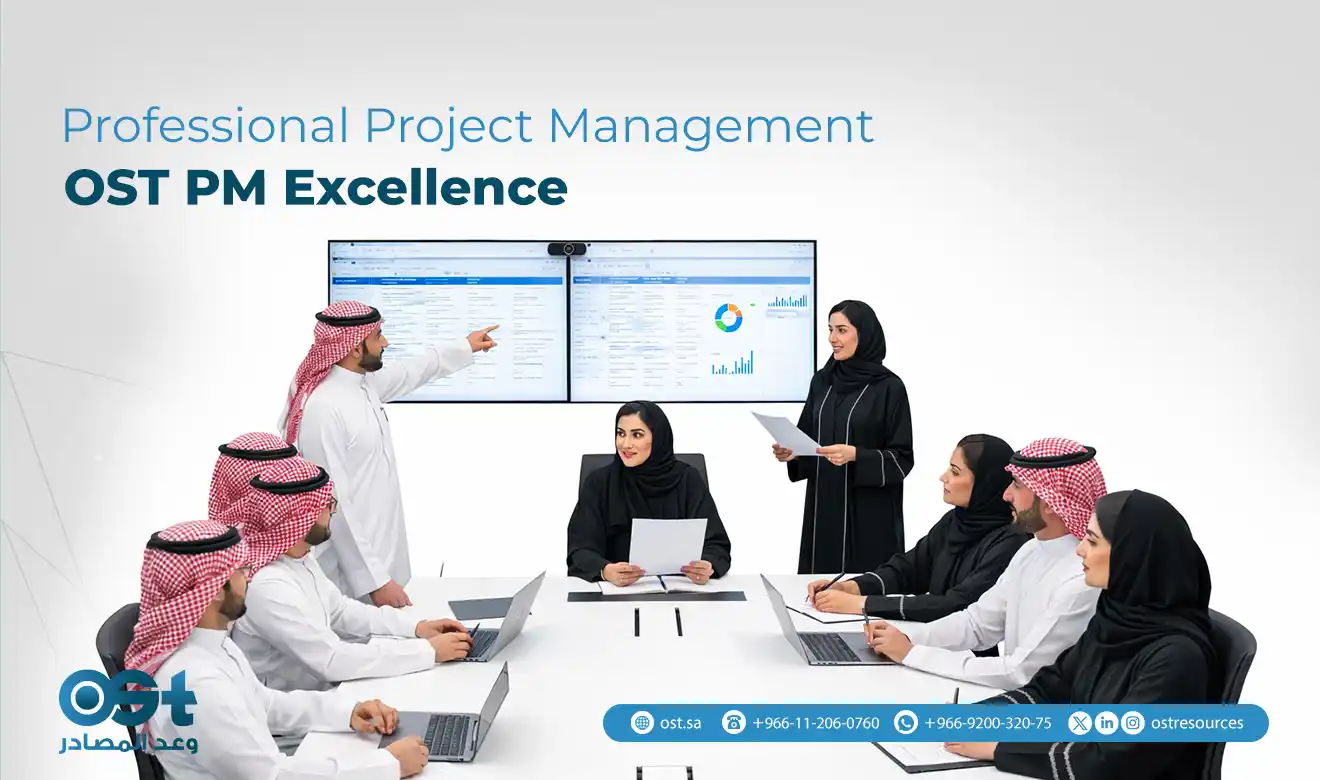
Professional Project Management is the structured application of knowledge, skills, tools, and techniques to ensure projects are delivered on time, within budget, and according to defined quality standards. The digital age, globalization, and heightened competition are making projects more complex in the business world today. As a result, organizations increasingly depend on professional project management to translate strategic objectives into measurable results.
Professional Project Management is not limited to scheduling tasks; it is a comprehensive discipline that integrates leadership, communication, risk management, and performance control. It brings about uniformity, openness, and predictability of the entire project development when implemented properly.
Importance of Project Management
Project management is important in enhancing efficiency, cost control, and the satisfaction of stakeholders. Organizations that invest in professional project management practices are more likely to complete projects successfully and achieve long-term business goals.
Among the major advantages of efficient project management, there are:
- Attainable goals and deliverables.
- Better coordination of departments.
- Efficient resource exploitation.
- Reduced operational waste
- The increased customer/stakeholder confidence.
In the absence of planned project management, projects have been known to experience scope creep, project delays, and overruns.
Planning Projects the Right Way
Planning is the foundation of Professional Project Management. A clear project plan serves as a guide to follow the course, execution and decision-making of a project in the entire project life cycle. It aids in forecasting the difficulties by teams and effective resource allocation.
Proper planning of a project usually entails:
- Project scope definition and project goals.
- Determining responsibilities and stakeholders.
- Developing achievable timelines and targets.
- Cost estimation and resource needs.
- Setting up communication and reporting schemes.
Managing Time and Budget
Time and budget management are among the most critical elements of professional project management. Projects have to be well-balanced between quality, cost, and time to bring value.
Time and budget are controlled by professional project managers through:
- Work breakdown structures (WBS).
- Proper cost estimation methods.
- Time management applications and schedules.
- Constant checking and variance check.
- Remedial measures in case of deviations.
Reducing Project Risks
Risk management is a proactive activity that tries to identify and reduce the possibility of potential threats before they affect the project outcomes. Professional Project Management emphasizes structured risk assessment throughout the project lifecycle.
The most common risk management practices are:
- Risk identification meetings.
- Risk analysis, qualitative and quantitative.
- Risk response planning
- Risk monitoring and reporting.
Proper risk management enhances project resilience and makes teams address the unforeseen issues promptly.
Tools and Methodologies Used in Professional Project Management
Professional Project Management relies on established methodologies and digital tools to enhance control and collaboration. Depending on the complexity of the project, industry, and organizational culture, the selection of the methodology would be made.
Widespread methodologies are:
- Waterfall projects are structured and predictable.
- Agile in flexible and iterative environments.
- Mixed methods of the two models.
Well-known project management software involves:
- Microsoft Project
- Jira
- Asana
- Trello
Team Coordination Strategies
Team coordination strategies are established to guarantee that the team collaborates towards reaching a specific objective humanTeam Coordination Strategies Team coordination strategies are put in place to ensure that the team works in order to achieve a certain goal.
Team coordination and communication are essential in the project implementation process. Professional project managers develop structures that promote teamwork, responsibility, and openness.
Some of the strategies of effective team coordination are:
- Well-delimiting roles and responsibilities.
- Frequent status meetings and updates.
- Distribution of communication through a centralized medium.
- Areas of conflict resolution.
Performance Tracking
Tracking of performance enables organizations to gauge progress and diagnose problems at an early stage. Professional Project Management uses key performance indicators (KPIs) to evaluate efficiency and effectiveness.
Typical performance indicators are:
- Schedule variance
- Cost variance
- Resource utilization
- Quality compliance
Integrative performance monitoring facilitates evidence-based decision-making and the process of continuous improvement.
When to Outsource Project Management Services
Outsourcing project management services is a good strategic move for organizations that do not have the expertise in project management or have complicated and high-risk projects. It is outside project managers who introduce objectivity, expertise, and tested models.
| Business Situation | In-House Project Management | Outsourced Project Management |
| Internal capacity | Limited availability of skilled PMs | Immediate access to experienced professionals |
| Project complexity | Suitable for routine or small projects | Ideal for complex or high-risk projects |
| Industry expertise | General knowledge | Specialized industry experience |
| Deadlines | Flexible timelines | Tight or critical deadlines |
| Oversight | Internal bias possible | Objective and independent control |
| Cost structure | Fixed long-term costs | Flexible, project-based costs |
Professional Project Management by OST
OST delivers Professional Project Management services focused on excellence, efficiency, and measurable results. OST is a combination of certified project managers, industry best practices, and advanced tools to assist organizations within different industries.
The project management strategy of OST focuses on:
- Business alignments with strategy.
- Planned and organized execution.
- Open reporting and communication.
- Risk and performance monitoring.
This makes sure that each project has given optimum value to the stakeholders.
Contact OST
Organizations seeking reliable and professional project management solutions can contact OST to discuss their project needs. OST offers specialized services that are aimed at delivering successful projects within the project initiation and closure phases.