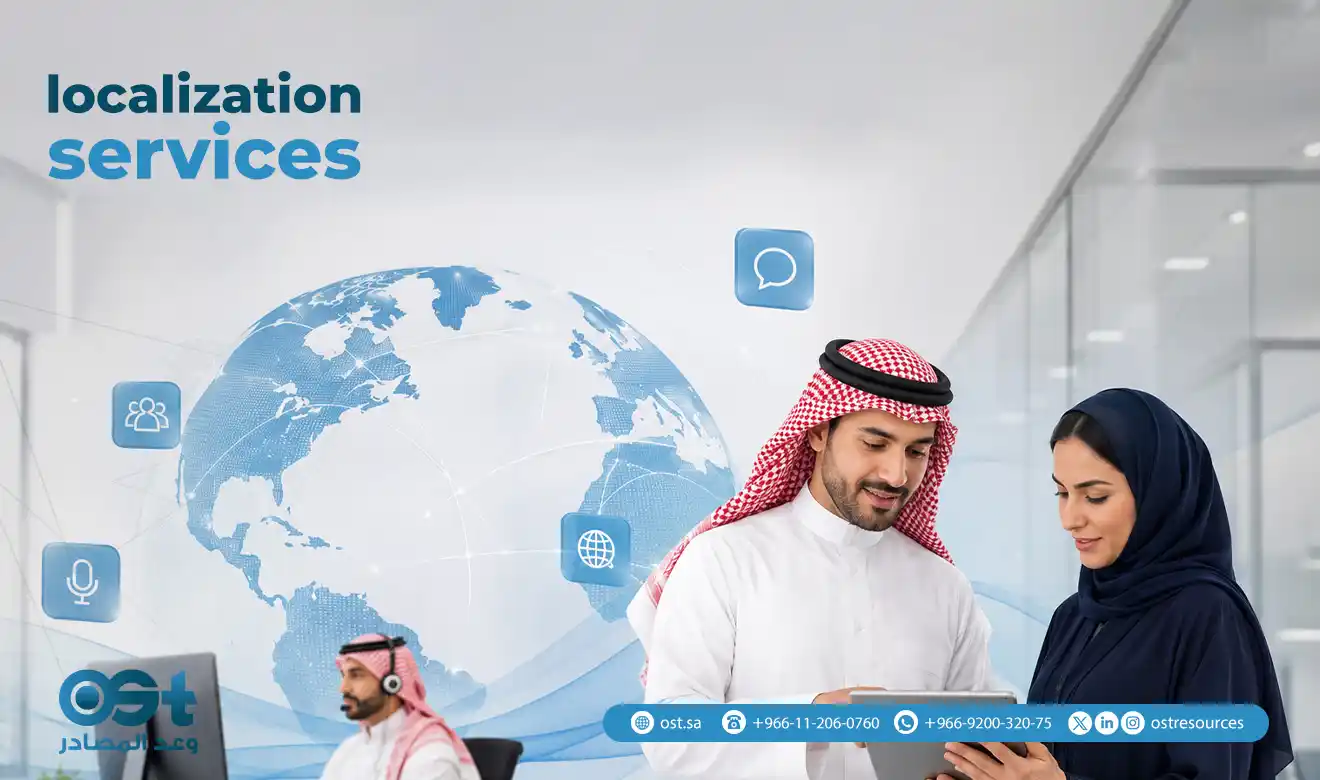
The economic transformation of Saudi Arabia under Vision 2030 has led to a growing emphasis on workforce localization, particularly in the context of businesses across different sectors. Localization services are becoming a key investment strategy for companies aiming to address workforce needs, enhance compliance, and foster sustainable talent pipelines. Localization strategies are more than just hiring local employees. Their priorities are workforce planning, talent development, and recruitment and retention of employees for the long term
Workforce Localization Services in Saudi Arabia
Localization services assist in matching the strategy of the local workforce with the national employment objectives. These services aid businesses in recruiting, hiring, and training local talent and ensure adherence to the workforce laws.
Workforce localization encompasses several activities, such as recruitment planning, talent acquisition, workforce development, workforce analysis, and compliance monitoring. These processes are often handled by specialized service providers by companies to ensure that they are done efficiently and effectively.
Localization needs are constantly changing, and businesses must have structured workforce solutions to keep up with them while not impacting productivity. Professional localization services offer the know-how to develop long-term hiring plans and strategies.
Benefits of Localization for Growing Companies
There are multiple benefits of localization for businesses aiming to achieve sustainable growth in Saudi Arabia. In addition to compliance, workforce localization can contribute to the stability of the workforce and enhance the overall performance of businesses.
Retention rates are likely to be higher and staff turnover lower in companies that invest in local talent. Workers in the area are usually more familiar with the local business environment, customer expectations, and business culture.
Other advantages of localization are the following:
- Improved workforce stability.
- Improved conformance with regulatory requirements.
- Enhanced employer reputation.
- Reduced recruitment and turnover costs.
- Improved customer and stakeholder relationships.
- Long-term workforce sustainability.
The benefits of localization make it a business decision and not just a compliance requirement.
How Localization Improves Business Performance
The strategic localization successfully supports the success of the organization. Companies that foster local talent pools tend to be more resilient in the face of fluctuations in market conditions and business needs.
Localization enhances communication, fosters cooperation, and provides long-term workforce development opportunities. Having employees who are well-versed in local business practices can enhance customer satisfaction and operational efficiency.
Organizations that prioritize their employees’ learning and development also have improved internal capacities. By nurturing local talent and skills, organizations can cultivate a more robust talent pipeline and minimize reliance on external recruitment efforts.
Recruitment Support for Local Hiring
One of the key factors in effective localization efforts is the recruitment process. Strategic planning and access to the right talent network are needed to find qualified local professionals.
By targeting recruitment efforts, implementing employer branding strategies, and engaging with educational institutions, organizations can increase the likelihood of recruiting locally. These initiatives enable companies to attract qualified candidates and foster future talent pipelines.
Professional recruitment support can help in the following ways:
- Candidates’ sourcing and screening.
- Planning and forecasting the workforce.
- Talent acquisition strategies.
- Graduate recruitment programs.
- Employee onboarding support.
- Market insights and hiring tips.
Localization Strategies for Private Sector Companies
Private sector entities may need specific localization solutions depending on their industry, workforce, and business goals. One size doesn’t fit all.
The first steps of a successful localization strategy usually involve workforce analysis and compliance assessments. Businesses should seek to understand the existing skills gaps and create a strategy to grow the participation of local skills over time.
Below are some of the most frequent localization methods that are employed by the private sector:
Localization Strategy | Business Benefit |
Workforce Planning | Supports long-term hiring goals |
Graduate Programs | Builds future talent pipelines |
| Employee Development | Strengthens workforce capabilities |
| Succession Planning | Prepares future leaders |
Talent Acquisition | Improves hiring efficiency |
| Retention Programs | Reduces employee turnover |
These strategies are effective when applied correctly to support the organization’s localization goals and to keep the operational performance in check.
Challenges in Workforce Localization
While there are many advantages of workforce localization, there are also some potential challenges that businesses may face when implementing it. A frequent difficulty is recruiting local employees with the right skills and expertise.
Recruitment may be challenging when there is a shortage of skilled workers, especially in industries that are booming. Employee retention, workforce development, and succession planning are other issues that organizations might encounter.
Other common localization problems are:
- Lack of skills in certain areas.
- Strong demand for skilled workers.
- Training and development needs.
- Workforce planning complexities.
- Evolving compliance requirements.
To overcome these challenges, a proactive approach is needed that involves recruiting, workforce planning, and employee development programs.
End-to-End Localization Services by OST
OST offers full-service localization solutions geared to help companies create sustainable workforces and meet compliance goals. The company helps organizations with all aspects of localization, from staffing and hiring to training and retention.
Through this insight, OST creates tailored workforce solutions to meet the client’s specific needs and operational objectives while addressing industry needs. These services enable organizations to recruit high-quality local staff and enhance the performance of their staff and their sustainability.
With OST’s expertise, businesses can better address the challenges of their workforce and focus on growth and operational excellence.
Contact OST
Why Companies Need Localization Experts
Workforce localization is a complex process with several steps, which need specific skills and experience. Businesses that collaborate with localization specialists tend to see improved results due to the access they provide to tried and tested recruitment strategies, workforce planning know-how, and compliance assistance.
Localization professionals can assist businesses in understanding their current talent needs, enhancing recruitment efforts, and establishing sustainable strategies. They also offer important clues to job growth and training needs, as well as market trends.
Companies opt for localization experts for the following reasons:
- Improved workforce planning.
- Faster recruitment processes.
- Better compliance management.
- Availability of skilled local resources.
- Improved staff retention programs.
- Reduced workforce risks.
With these benefits, organizations can concentrate on growth and still meet their staff targets efficiently.