
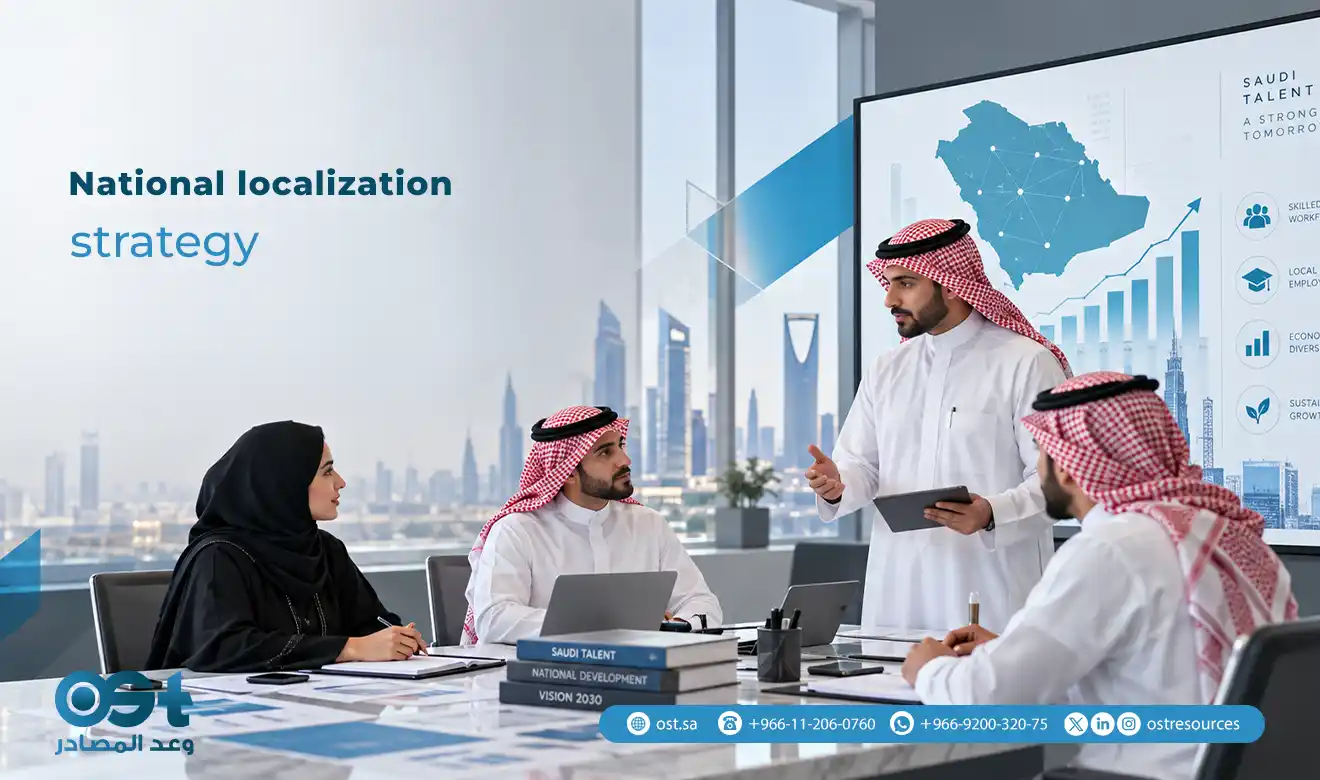
The national localization strategy contributes to Saudi Arabia’s economic growth by creating job opportunities for its citizens, developing local talent, and reducing reliance on foreign expertise. It also seeks to strengthen local industries, improve workforce skills, and boost business performance. By empowering Saudi professionals and promoting knowledge transfer, the strategy helps to achieve Vision 2030, diversify the economy, and create a competitive and sustainable business climate.
What Is the National Localization Strategy in Saudi Arabia?
Saudi Arabia’s national localization strategy aims to strengthen the economy by increasing local production, developing domestic industries, and reducing reliance on imports and foreign expertise. Saudi Vision 2030 aims to localize promising manufacturing industries, expand the oil and gas sector, develop mining, and improve logistics services.
The strategy also encourages the use of renewable energy, advanced technologies, and localization of military industries. Saudi Arabia aims to create quality jobs, improve supply chain efficiency, and increase local content in a variety of industries by encouraging local investment, attracting foreign capital, and developing national talent. These initiatives promote economic diversification, increase global competitiveness, and position the Kingdom as a leading industrial and logistics hub.
Why Workforce Localization Matters to Saudi Arabia’s Labor Market
Workforce localization is critical to strengthening Saudi Arabia’s labor market and meeting Vision 2030 objectives:
- Localization helps to reduce unemployment and reliance on foreign workers by expanding employment opportunities for Saudi nationals.
- It also encourages businesses to invest in training, professional development, and skill enhancement, which will prepare local talent for specialized roles.
- Workforce localization promotes economic diversification, increases productivity, and strengthens the private sector.
- Furthermore, hiring Saudi employees allows businesses to gain a better understanding of local culture, customer expectations, and market demands.
- Businesses that comply with Saudization requirements can improve workforce stability, promote long-term economic growth, and help to build a competitive labor market that benefits both employers and Saudi citizens.
The Main Objectives of the National Localization Strategy
The primary goal of the national localization strategy is to incorporate sustainable development goals into national development plans and policies:
- This strategy seeks balanced economic, social, and environmental development while addressing each country’s unique needs and priorities.
- It focuses on coordinating government policies, identifying local challenges, and establishing effective mechanisms for tracking progress.
- It encourages stakeholder collaboration, improves resource allocation, and facilitates evidence-based decision-making.
- By aligning national priorities with the United Nations Sustainable Development Goals.
- The strategy assists governments in achieving long-term growth, strengthening institutional performance, and improving the quality of life for current and future generations.
The Role of Employers in Supporting Workforce Localization
Employers play an important role in promoting workforce localization by tailoring their recruitment strategies to local labor market requirements and regulations:
- They can help by hiring local talent, providing professional training, and developing employee skills to meet industry standards.
- Employers must also follow local employment laws, HR policies, and labor regulations.
- In addition, creating inclusive workplaces and providing clear onboarding procedures make employees feel valued and supported.
- Businesses that invest in local talent and standardize effective workforce management practices can increase productivity, strengthen employee retention, reduce legal risks, and promote long-term growth.
- These efforts help to drive economic development and create a skilled, competitive workforce.
Key Challenges in Implementing Localization Strategies
Challenges | Description |
Disjointed Departmental Workflows | Disjointed departmental workflows are a significant barrier that can result in redundant work, inconsistent terminology, and higher expenses. |
Outdated Technology and Systems | Outdated technology and disjointed systems also hinder teamwork and slow down procedures. |
Balancing Local and Global Needs | Finding a balance between local cultural preferences, market demands, and global consistency is another difficulty. |
| AI and Human Expertise | Artificial intelligence speeds up translation, but human knowledge is still necessary to guarantee accuracy and cultural relevance. |
| Measuring ROI and Funding | Businesses may find it difficult to quantify ROI, prove their worth, and obtain adequate funding. |
| Managing Global Operations | Coordinating international teams, managing several vendors, and upholding quality standards can make localization efforts more difficult and postpone sustainable growth. |
How OST Supports Businesses With Workforce Localization
Our national localization strategy helps companies develop a skilled workforce that fits both organizational objectives and local employment requirements:
- OST assists businesses in finding qualified workers, streamlining the hiring process, and effectively managing labor requirements through all-inclusive employment outsourcing solutions.
- In order to help businesses find qualified candidates for their operational needs, we offer talent sourcing, candidate screening, skills assessments, onboarding, and continuous employee management.
- By assisting businesses in adjusting staffing levels to shifting market demands while preserving operational flexibility.
- We also support workforce planning. Relevant Saudi labor laws, social insurance requirements, and Saudization goals, such as Nitaqat requirements, are all covered by our compliance management services.
- We increase workforce productivity while allowing businesses to concentrate on core operations by handling crucial employment administration.
- Our tailored staffing solutions also take into account organizational culture, skill gaps, industry requirements, budgets, and timelines.
- This customized strategy aids businesses in bolstering their local talent pool, lowering hiring costs, and successfully adapting to changing labor demands.
- We assist companies in pursuing sustainable growth while advancing their national localization strategy in Saudi Arabia through organized hiring and continuous support.
Contact Us
Searching for dependable labor solutions that meet your company’s demands? Contact us right now to find out how our expert services can streamline hiring, improve operations, and aid in your expansion. Our staff is prepared to talk about your needs and assist you in locating the best answers.