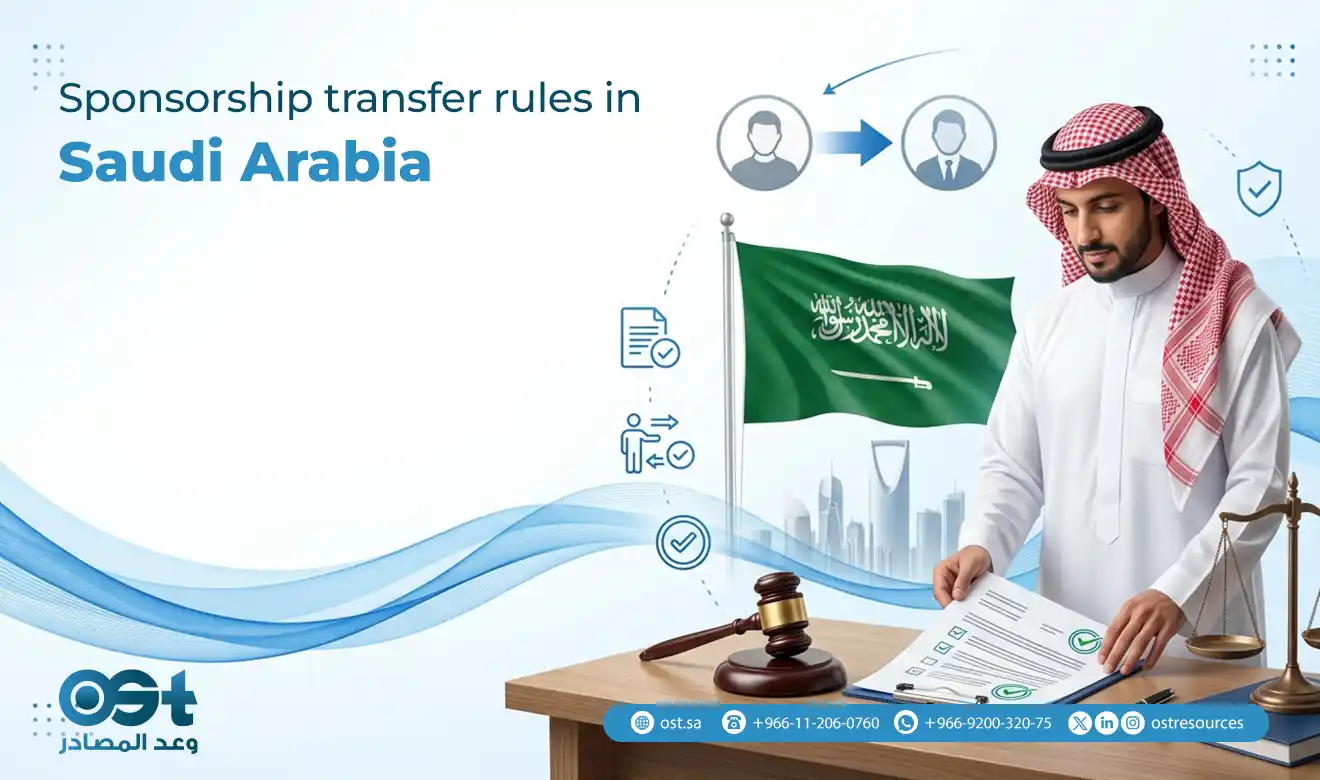
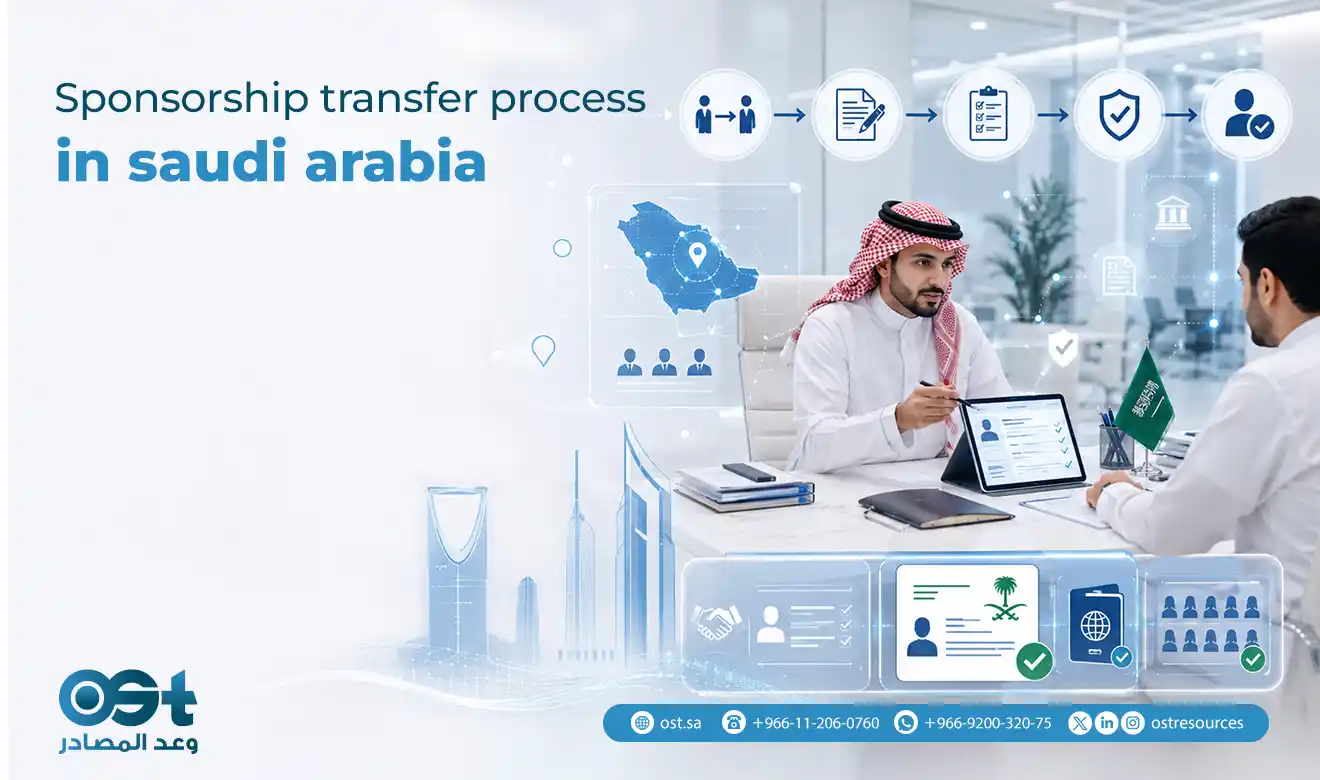
sponsorship transfer process in Saudi Arabia has been digitized and is now a structured process after being a paper-based negotiation. In Saudi Arabia, the sponsorship transfer process is primarily managed by Qiwa, and the final update of residency takes place on Absher/Muqeem under the Labor Reform Initiative. It explains what the process entails, what paperwork is required before the process even begins, the sequence of action and when the responsibility of the employer starts and stops.
Understanding the Sponsorship Transfer Process in Saudi Arabia
In Saudi Arabia, the sponsorship transfer process in Saudi Arabia refers to the legal process of transferring an expatriate employee’s residency and work sponsorship from one sponsor to another. It abolished the previous kafala system, in which employers made decisions on the transfer of workers, in favor of a contract-based transfer system, in which the Ministry of Human Resources and Social Development tracks the transfer process at every stage, and decisions are made by digital transfer. Requirements for current-employer approval are primarily based on the number of years the employee has been employed and the exemption conditions.
Required Documents Before Starting the Process
The following matters should be prepared before initiating a sponsorship transfer process in Saudi Arabia: The employer and employee should ensure that a valid Iqama is in hand, an offer letter or employment contract signed by the new employer, and the new employer’s Qiwa and GOSI records are active and in good standing.
In addition, employers need to verify their Nitaqat (Saudization) status before transferring, as it may prevent or obstruct a transfer before it begins if the employer is rated red or non-compliant.
Step-by-Step Sponsorship Transfer Procedure
The typical order is as follows:
- The new employer sends a transfer request to Qiwa with the employee’s Iqama number and contract information.
- The employee accesses and accepts the offer in his/her Qiwa/Absher account.
- The current employer is informed and, if there is sufficient length of service, may require to give or witness a notice period.
- Finalization of the transfer by the new employer, including applicable fees, occurs when a notice period is required and that period has elapsed, or once approvals are received.
- The employee’s Iqama and sponsor information is also updated through Absher or Muqeem. Absher or Muqeem is also used to update the information of an employee’s Iqama and sponsor.
Generally, employees who have worked fewer than a year will have to get approval from their current employer, and employees who are employed for more than a year may be able to transfer without the current employer’s approval, which may be reduced by the current employer.
Employer Responsibilities During the Transfer
The responsibility of the new employer is not finished after they submit the request. They will be expected to update contract and wage terms in Qiwa, confirm that the position and salary terms are as advertised, and ensure that the employee is registered properly in GOSI and the Wage Protection System upon successful completion of the transfer.
Any unpaid dues must also be paid by the current employer within the required time frame, as outstanding dues can hinder or even prevent the process.
Legal Requirements Every Business Should Know
There are some exceptions to the normal approval process. Currently, an employee is not required to have their current employer’s approval if they have not received any wages for three consecutive months, if the employer did not promptly provide a work permit, or if their Iqama or work permit has expired. In addition to the hiring restrictions, businesses in a red Nitaqat zone also face additional restrictions on transfers.
Compliance with the requirements of Qiwa, GOSI, and Nitaqat ensures that most of the conflict that leads to transfers is avoided.
Requirement | Why It Matters |
Valid Iqama | Required to complete the transfer process. |
Active Qiwa Account | Enables digital transfer requests and approvals. |
GOSI Registration | Ensures the employee is registered under the new employer. |
| Compliant Nitaqat Status | Businesses in non-compliant categories may face transfer restrictions. |
| Accurate Employment Contract | Contract details must match the information submitted in Qiwa. |
Tips for Completing the Process Smoothly
There are some habits that are always the cause of delays. Ensure that the records held by Qiwa, GOSI, and Mudad are kept in sync, and do not update each record independently, as incorrect data in one record may lead to the rejection of a request.
Don’t miss deadlines when transferring notifications or risk having to resubmit a request and restart from the beginning. It is important to verify requirements in real-time, either on the Qiwa platform or with an HR partner, to ensure they meet current requirements, given that timelines and conditions may change.
Simplify Employee Transfers with OST
Sponsorship transfers are a combination of contracts, GOSI, Nitaqat, and Qiwa, making them a task many businesses in Saudi Arabia prefer to delegate to an experienced HR partner, rather than to their in-house teams. Since 2008, OST (Resources Promise) has been a certified partner in the Kingdom for workforce and compliance operations, and with the ISO 9001 quality management certification and ISO 27001:2022 information security certification, it is ideal in this context because of the amount of personal and contractual data that a transfer involves. With 17+ years of market experience, OST enables businesses to ensure their transfers stay on track and in compliance without any delays or hassle.
Need help managing employee sponsorship transfers correctly? Contact us to simplify the process for your business.