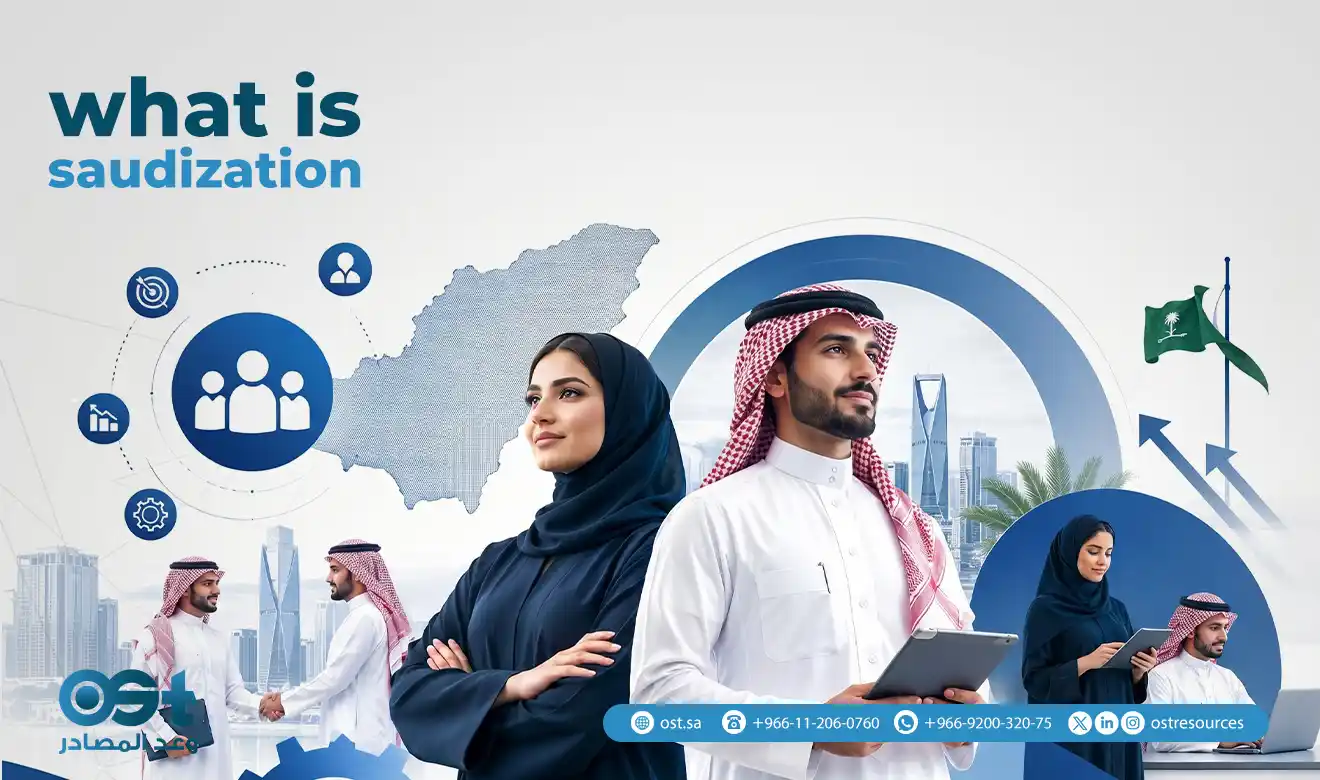
What is Saudization, and why do employers need to know about Saudization? Saudization is one of the most important workforce initiatives undertaken by the Kingdom of Saudi Arabia aimed at boosting the participation of Saudi nationals in the private sector. Saudization is one of the measures Saudi Arabia has implemented as a part of its long-term economic transformation plans, which aim to foster sustainable business growth and provide employment opportunities for the country’s talents. Businesses in Saudi Arabia need to be aware of Saudization, the impacted sectors, and the creation of strategies to attract and build a workforce that meets the localization criteria. Businesses can ensure compliance and create a more robust, effective team by taking a proactive approach.
What is Saudization?
To determine what Saudization is, one must first understand its purpose. The government’s initiative to boost the number of Saudi citizens working in the country’s different sectors and professions is called Saudization or workforce localization.
The program is designed to promote the recruitment and development of Saudi nationals in the private sector and to minimize the use of expatriates in specific jobs. Businesses are generally expected to achieve certain localization targets, depending on their industry, business size, and employee composition.
In addition to hiring, Saudization prioritizes employee development, career growth, and a sustainable workforce. By implementing localization strategies, organizations can enjoy better business performance and workforce stability.
How Saudization Supports Saudi Employment
Saudization is a key factor in providing job opportunities for Saudi citizens and boosting the local job market. The program promotes the development of local talents and skills, which will help build a skilled workforce to support the economic development of the Kingdom.
Saudization has contributed to employment in a number of ways, including:
- Creating new job opportunities for Saudi citizens.
- Promoting business investment in workforce development.
- Assisting with graduate employment and career advancement.
- Raising the participation of workers in various sectors.
- Addressing unemployment through targeted employment programs.
- Encouraging the development of skills and professional training.
These initiatives can aid in creating a more sustainable labor market and allow businesses to tap into the local talent pool.
Sectors Most Affected by Saudization
Saudization requirements are implemented in various sectors of the Saudi economy, but some sectors have more localization requirements than others. In these industries, companies have to be mindful of the recruitment and workforce planning activities in order to ensure compliance.
What is Saudization? Several sectors have been heavily affected, as shown in the table below:
Sector | Saudization Focus |
Retail | Increased employment of Saudi nationals |
Healthcare | Expansion of the local healthcare workforce |
Banking | High localization requirements |
| Hospitality | Development of Saudi talent pipelines |
| Information Technology | Growth of skilled Saudi professionals |
| Human Resources | Greater local workforce participation |
Benefits of Saudization for Private Companies
Some organizations may see what is Saudization as a compliance obligation, but it can have a number of long-term advantages that can enhance business performance.
Businesses that invest in Saudi employees tend to have better retention rates, as locals are more likely to look for long-term career prospects within the company. This can cut down the recruitment expenses and make the operations more stable.
Employer branding can be boosted by a strong localization strategy. Companies that invest in their employees and national employment initiatives can be seen in a better light by customers, partners, and stakeholders.
Other advantages are cultural awareness, better customer relationships, and a better fit with local market requirements. The benefits of these will assist companies in developing sustainable growth strategies while ensuring compliance.
How Recruitment Agencies Support Saudization
Recruitment agencies are crucial in supporting companies to comply with the Saudization requirements. It can be difficult to find qualified Saudi professionals, especially in industries that are in high demand for talent.
A specialized recruitment firm can assist businesses in finding the right person for the job, speed up the hiring process, and save time. Their expertise allows organizations to tap into a wider talent pool and enhance their workforce planning practices.
Recruitment agencies can help companies in the following ways:
- Candidates’ sourcing and screening.
- Workforce planning assistance.
- Talent acquisition strategies.
- Graduate recruitment programs.
- Market information and employment trends.
- Employee onboarding support.
These services can assist organizations in recruiting and retaining Saudi professionals and in achieving their long-term localization objectives.
OST Solutions for Saudization Compliance
OST offers a complete package of workforce solutions to businesses to realize successful what is saudization outcomes. By providing personalized recruitment solutions, workforce planning guidance, and talent acquisition expertise, OST helps organizations develop sustainable workforce strategies.
The firm’s strategy is to grasp the specific operational needs of its clients and create tailored solutions that meet compliance goals. OST contributes to the long-term success of the workforce by facilitating the recruitment of qualified Saudi nationals and enhancing employee development programs in businesses.
From recruitment to workforce analysis and talent management, OST offers practical solutions that help companies boost workforce performance and achieve their localization objectives.
Contact OST
Future of Saudization in Saudi Arabia
Saudization’s future is tied to Saudi Arabia’s Vision 2030 goals and the current economic diversification initiatives. Localization efforts are likely to be even more relevant as new industries come into existence and the needs of the workforce change.
Companies will likely invest in training, upskilling, and hiring strategies to address future needs. Technology, education partnerships, and professional development programs will also be more influential in helping drive Saudi jobs.
In the ever-changing Saudi market, organizations that take the initiative to navigate these shifts will be better equipped to meet compliance requirements, recruit the best talent, and gain a competitive edge.