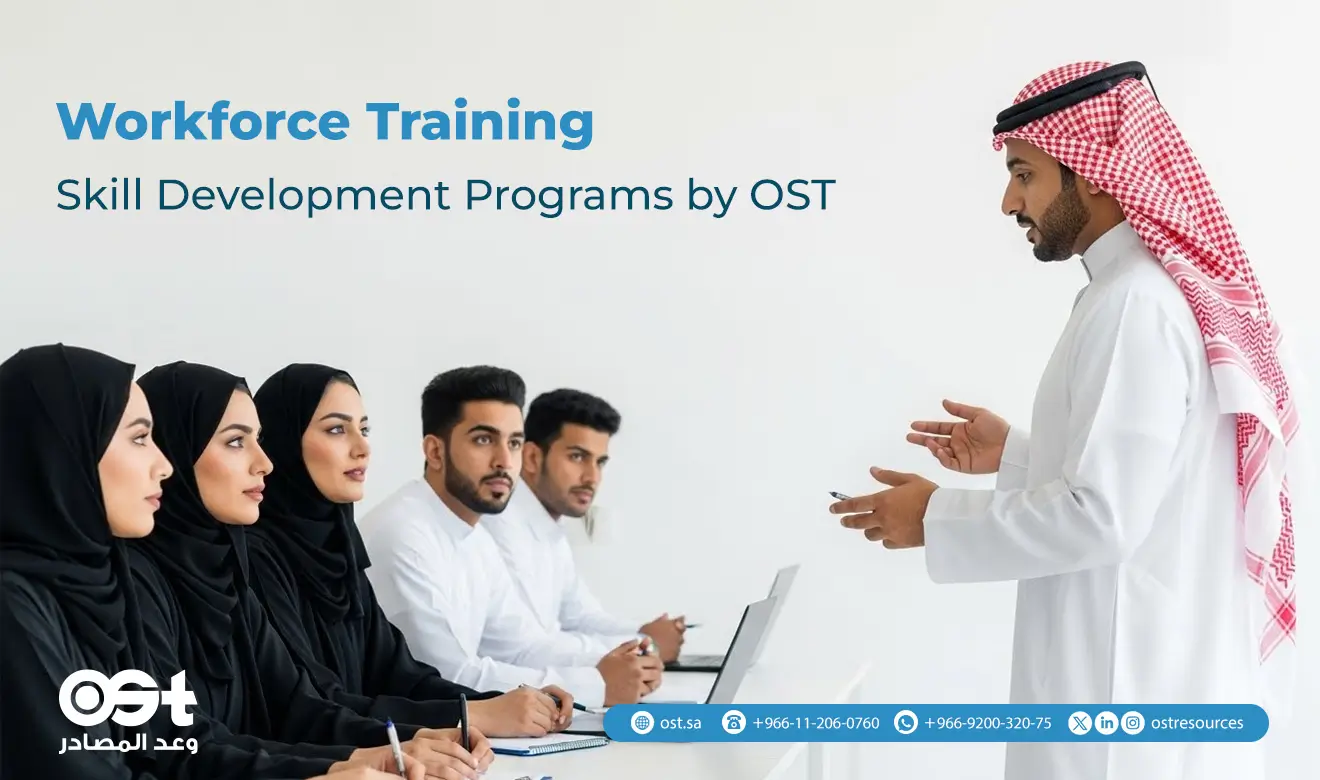
Workforce training is a critical element in enhancing employee skills, improving productivity, and driving organizational success. Organizations can keep up with changing market conditions by systematically building employee capabilities to ensure they are competitive, flexible, and ready to meet market needs. Effective workforce training programs are designed to address specific skill gaps, foster employee engagement, and align talent development with organizational goals.
Why Workforce Training Is Essential for Organizational Success
Workforce training is fundamental to the growth and sustainability of any organization. It makes sure that the employees possess the knowledge, skills, and competencies necessary to execute their jobs in a manner that was effective manner. Training minimizes mistakes, enhances productivity, and aids in the innovation process by updating the employees with the newest industry practices. Additionally, workforce training improves employee satisfaction and retention by demonstrating a commitment to personal and professional growth.
Types of Workforce Training Programs for Modern Employees
Modern workforce training programs are diverse and tailored to meet the needs of employees at various levels. Common types include:
- On-the-Job Training: Hands-on learning that is combined with regular working activities.
- E-Learning and Online Courses: Flexible online platforms of learning that employees are able to access at any time.
- Seminars and Workshops: Active programs aimed at the acquisition of certain skills or competencies.
- Mentorship and Coaching: Individualized direction and learning by senior employees.
- Compliance and Regulatory Training: Training programs that guarantee that employees adhere to standards in the industry and legal requirements.
- Leadership and Management Development: Special courses to train employees on leadership.
The program types have various learning objectives, skill levels, and needs of the employees.
Identifying Training Needs Across Different Job Roles
Identifying training needs is essential for designing effective workforce training programs. Training needs may be assessed in organizations by the use of performance reviews, employee surveys, and manager consultation. Different positions have their requirements; technical positions can be served by software training, and customer-facing positions can be developed by communicative skills. The following table is a summary of the important training needs by job role.
| Job Role | Key Training Needs |
| Technical Staff | Software proficiency, technical certifications, and problem-solving skills |
| Customer Service | Communication skills, conflict resolution, and product knowledge |
| Management | Leadership development, decision-making, and team management |
| Sales | Negotiation, customer relationship management, and product expertise |
| Operations | Process optimization, safety compliance, and efficiency techniques |
Measuring ROI of Workforce Training Initiatives
The quantification of the return on investment (ROI) of the training programs is critical to measuring the effectiveness of the provided programs and justifying the use of resources. The ROI can be measured by the organization by using the following measures:
- The performance of the employees is enhanced.
- Productivity gains
- Fewer errors or work-related accidents.
- Retention and engagement rates of employees.
- Efficient processes to save on costs.
With systematic monitoring of such indicators, organizations are able to measure the effect of training programs and areas of improvement that can be continually enhanced.
Common Challenges in Implementing Training Programs
Implementing workforce training programs often presents several challenges. These may include:
- Little finances and facilities.
- Employee opposition to change.
- Time shortage as a result of operational needs.
- The inability to measure the training effectiveness.
- Maintaining uniformity between two or more points/departments.
Overcoming these challenges requires comprehensive strategic planning, strong leadership and management support, and the integration of flexible, scalable, and technology-enabled training solutions that can adapt to changing organizational needs. Additionally, continuous feedback loops, employee engagement initiatives, and regular program evaluation are essential to maximize effectiveness and ensure measurable results across the workforce.
Future Trends in Corporate Learning and Development
The future of workforce training is shaped by technology, personalization, and continuous learning. Emerging trends include:
- Artificial Intelligence and Learning Analytics: personalizing training materials and monitoring the progress of the learner with AI.
- Gamification and Interactive Learning: Involvement of employees using the aspects of games and simulation.
- Microlearning: Short, targeted learning units that can be integrated into hectic job lives.
- Virtual and Augmented Reality: Intensive learning experiences in technical and safety training.
- Stable Learning Culture: The culture of encouraging employees to engage in lifelong learning in order to be competitive.
Adopting these trends helps organizations build a highly skilled, adaptable, and motivated workforce. By integrating AI-driven learning, gamification, microlearning, and immersive technologies into training programs, companies can create personalized learning experiences, enhance engagement, improve retention of knowledge, and ensure employees are equipped to meet both current and future business challenges.
Upgrade Your Team’s Capabilities with Workforce Training Solutions from OST
OST offers comprehensive workforce training solutions designed to enhance employee skills and support organizational goals. Between the tailor-made training packages and the interactive workshops and online learning systems, OST assists companies in bridging the skills divide, enhancing performance, and creating a culture of unceasing improvement. The training programs are individualized to satisfy the specific needs of your team and industry needs so as to guarantee measurable outcomes and high ROI.
Contact OST
In order to modernize your employees and deploy efficient skill development plans, reach out to OST to arrange custom training plans which meet your organizational needs. Contact us today to know more about Workforce Training